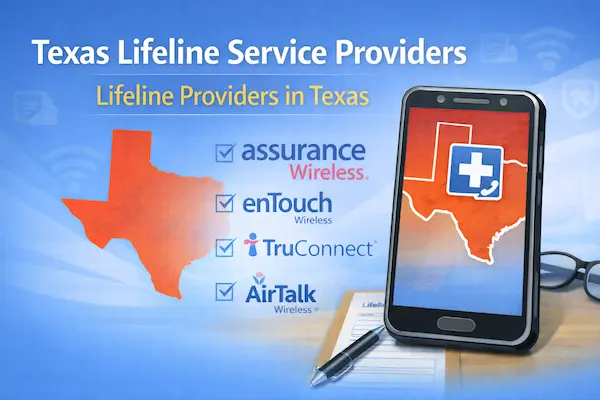
Texas Lifeline service providers – Lifeline providers in Texas
If you’re searching for Texas Lifeline service providers “near me,” the right answer depends on your ZIP code.
Even within the same city, different Lifeline providers in Texas can be available, unavailable, or limited based on coverage and enrollment rules.
That’s why this guide focuses on a simple comparison that actually works in real life: Coverage first, then plan basics, then the easiest way to apply.
You’ll also see how Texas Lifeline internet and Lifeline Internet Texas options fit into the program, because Texas isn’t only about phone service.
Independent content notice.
This article is informational and independent.
We are not affiliated with, endorsed by, sponsored by, or able to control any carrier, government agency, or third-party platform mentioned here.
Provider availability and specific offers depend on your ZIP code and can change at any time.
If you want a clear walkthrough before you start, use this guide to apply Lifeline online for a free government phone in a way that avoids common mistakes.
If your goal is specifically a device, this explainer on free cell phones from the government helps you understand what “free” can mean with provider promotions.
When you’ve already applied and you just want updates, here’s how to check your Lifeline application status without guessing.
Top Texas Lifeline service providers in Texas (ZIP-based list)
The “top” Texas Lifeline service providers are the ones that are actually available in your ZIP code and match how you use your phone or internet.
Use this list as your shortlist, then confirm availability before you commit, because provider availability depends on ZIP code.
- Life Wireless is a common choice people compare when they want mobile Lifeline service in Texas.
- enTouch Wireless is widely searched in Texas and is often compared for talk, text, and data offers.
- Assurance Wireless is frequently checked for ZIP-based availability and a guided application flow.
- StandUp Wireless is commonly compared when you want a Lifeline-supported mobile option and online signup.
- SafeLink Wireless is often searched under “government phones texas” and “free phone” terms, even though offers vary by state and ZIP.
- Access Wireless is another Lifeline-supported service that may be available depending on your ZIP code and eligibility path.
- Home phone or home internet providers can also participate, which matters if you’re searching “texas lifeline internet” instead of a mobile plan.
If you want a faster decision, sort providers into the category you actually need today.
| What you need | What to look for first | What usually decides the “best” option |
|---|---|---|
| Mobile phone service | Coverage in your ZIP | Reliable signal where you live and work |
| Mobile data for apps | Monthly data allowance | Whether the plan fits your daily usage |
| Home phone or home internet | Provider participation + address | Whether Lifeline applies to voice, internet, or a bundle |
Read also: If you already have Lifeline and want to change companies, use this guide on how to switch Lifeline providers without risking your benefit.
What each provider offers (mini cards)
Each mini card follows the same comparison order so you can scan quickly and choose confidently.
Keep in mind that Texas Lifeline providers can differ by ZIP code, and offers can change based on inventory and local coverage.
Life Wireless (Texas)
Coverage: Coverage depends on where you are in Texas, so you’ll want to confirm service in your ZIP code before enrolling.
Data / Talk / Text: Monthly allowances vary by offer and location, and you’ll see the exact details during enrollment.
Device options: Depending on eligibility and inventory, you may be offered a phone, or you may be able to use a compatible device.
ID requirements: Expect identity and eligibility verification, and be ready to provide documents if automated checks don’t match.
Pros: Strong option to compare if you want mobile Lifeline service in Texas with a straightforward signup flow.
Cons: Like all providers, availability can be limited by ZIP code and network performance in your specific area.
How to apply: Start with the provider’s enrollment steps, then follow the Texas-specific verification instructions you receive.
enTouch Wireless (Texas)
Coverage: Availability is ZIP-based, and you’ll confirm coverage during the application flow.
Data / Talk / Text: enTouch Wireless advertises Texas offers that can include talk, text, and a defined data amount, but your exact plan depends on current rules.
Device options: Phone availability can depend on eligibility and inventory, and BYOD may be possible for some applicants.
ID requirements: You’ll typically need identity details, your address, and proof of eligibility if the system requests it.
Pros: Often compared by people searching “free government phone texas” and “free government cell phones in texas” because enrollment is designed for low-income households.
Cons: Plan details and device offers can change, so always verify what you’re approving before you submit.
How to apply: Complete the provider signup, then follow the Texas enrollment instructions if you’re directed to state steps.
Assurance Wireless (Texas)
Coverage: Assurance uses a ZIP-based availability check, and service may not be available everywhere.
Data / Talk / Text: Assurance describes plans with monthly data and talk plus unlimited texts, but allowances can vary by state and offer.
Device options: Some eligible customers may qualify for a phone offer, while others may use a compatible device depending on the enrollment path.
ID requirements: You’ll provide identity details and may need documentation to confirm eligibility.
Pros: Helpful if you want a guided experience and want to confirm availability before spending time on paperwork.
Cons: Coverage limitations can appear even inside major metro areas, so don’t skip the ZIP check.
How to apply: Follow the provider’s online steps, and use this walkthrough for Assurance Wireless Lifeline program application if you want a clearer map of the process.
StandUp Wireless (Texas)
Coverage: Availability depends on ZIP code, and you’ll typically check coverage before completing enrollment.
Data / Talk / Text: Monthly talk, text, and data allowances vary by offer and location, so confirm details during signup.
Device options: Some applicants use BYOD, and device offers may depend on eligibility and inventory.
ID requirements: Identity and eligibility checks apply, and documentation may be required in Texas.
Pros: Good comparison option if you care about keeping your number and getting set up quickly.
Cons: Exact plan terms can change, so don’t rely on old screenshots or outdated plan summaries.
How to apply: Use the provider’s ZIP-based check, then follow the Texas-specific steps that appear during enrollment.
SafeLink Wireless (Texas availability varies)
Coverage: SafeLink notes that availability and coverage vary, so your ZIP code is the deciding factor.
Data / Talk / Text: Plan allowances can be state-specific, so you’ll want to confirm the current Texas offer during enrollment.
Device options: Depending on the offer, you may be able to bring your own phone or qualify for a device promotion.
ID requirements: Expect identity checks and proof requests if your eligibility can’t be confirmed automatically.
Pros: Often considered when people search “free government phones for texas” and want a recognizable national option.
Cons: Because requirements vary by state, the only safe approach is to confirm the exact Texas offer before submitting.
How to apply: Start through SafeLink’s enrollment flow and follow the instructions for Texas verification if you’re prompted.
Access Wireless (Texas availability depends on ZIP)
Coverage: Access Wireless availability is location-based, and you should confirm service for your specific address.
Data / Talk / Text: Offer details vary by state and enrollment rules, so verify your plan terms during the application.
Device options: Depending on eligibility and inventory, you may be offered a device or guided toward a compatible phone option.
ID requirements: Identity and eligibility checks apply, and documentation may be required for manual review.
Pros: Useful to compare if you’re building a shortlist of texas lifeline providers with multiple enrollment paths.
Cons: Device availability can change, so apply with realistic expectations and confirm what’s included.
How to apply: Begin with the provider’s enrollment page, then complete Texas verification steps as instructed.
Texas Lifeline service providers: coverage & limitations
Coverage and limitations for Texas Lifeline service providers come down to three things: your ZIP code, the provider’s service type, and program rules.
Once you understand those three, it becomes much easier to avoid dead ends and pick the right option the first time.
Lifeline is a discount program that can apply to phone service, internet service, or a qualifying bundle, but you generally can’t apply the discount to everything at once.
That matters a lot when you’re comparing texas lifeline internet against a mobile plan, because you’re choosing where the discount helps you most.
- Provider availability depends on ZIP code, and a provider listed “in Texas” may still not serve your address.
- One Lifeline discount per household is a core rule, which means it’s not one discount per person.
- You typically choose phone or internet for the discount, and the exact setup depends on the provider and service type.
- Device offers are not guaranteed, because “free phone” promotions depend on inventory and current rules.
- Address and identity matching can delay approvals when records don’t line up perfectly.
If your application stalls because your address doesn’t match what the system expects, this guide on Lifeline address verification walks you through the most common fixes.
If you think you’ll need paperwork, keep this ready before you apply: Lifeline income proof documents.
If multiple people in the same home need separate service lines, read Lifeline enrollment for multiple family members so you don’t violate the household rule by accident.
Texas-specific reality: the application path can feel different
Texas has a state-specific enrollment flow in addition to the federal program rules, so your Texas Lifeline application steps may look different than a friend’s in another state.
In practice, that means your provider may guide you through Texas enrollment steps that are unique to Texas residents.
When you’re comparing lifeline program texas options, assume the “best” provider is the one that can verify you cleanly and serve your ZIP code reliably.
How to apply for Texas Lifeline service providers
You apply by choosing a provider that serves your ZIP code, completing eligibility verification, and then activating service after approval.
If you want the smoothest experience, you’ll prepare your information first, then apply once, carefully, instead of submitting multiple half-finished applications.
- Pick whether you want mobile service or lifeline internet texas, because the discount usually applies to one qualifying service.
- Shortlist 2 to 3 texas lifeline service providers and confirm availability by ZIP code.
- Gather your basic info, including your full legal name, date of birth, and your address exactly as it appears on official records.
- Start the application through your chosen provider, and follow the Texas-specific prompts you’re given.
- Upload documents only if you’re asked, and make sure every image is clear and complete.
- After approval, activate service and save your confirmation details in case you need support later.
If your main goal is a free cell phone for low income texas, treat the phone as a possible bonus, and focus first on eligibility, ZIP availability, and plan fit.
For the most beginner-friendly walkthrough, follow how to apply Lifeline online and use it as your checklist while you complete your forms.
If you qualify through benefits, these guides can help you confirm your path quickly: free phones for SNAP, free phone options for Medicaid recipients, and free cell phone options for SSI recipients.
What usually slows approvals down in Texas
Most delays happen because the system can’t match your identity or address automatically, or because documents are incomplete.
- Using a nickname instead of your legal name can trigger identity mismatches.
- Typing an apartment number differently than your lease or ID can cause address verification problems.
- Uploading blurry documents can force a manual review, which adds time.
- Submitting multiple applications at once can create duplicates that slow everything down.
If you already submitted your texas lifeline application and you’re waiting, use this status-check guide so you know exactly what to look for next.
If you need to correct your name, phone number, email, or address after enrollment, use how to update your Lifeline information to prevent renewal issues later.
Switching, moving, and keeping your benefit active
You can usually change providers when your needs change, as long as you follow the program rules and complete the transfer correctly.
When you’re ready, follow how to switch Lifeline providers to avoid accidental service gaps.
If you’re relocating, this guide on transferring Lifeline to a new state helps you plan the move without losing your discount.
To keep your benefit, you’ll also need to respond to renewal requests, so save this walkthrough on the Lifeline recertification deadline and how to complete it.
If your priority is personal safety while you’re waiting for enrollment or replacing a device, this emergency phone app guide can help you build a backup plan.
Related content: If you’re still comparing “government phone” offers, revisit free cell phones from the government and focus on coverage and eligibility before device hype.
Once you confirm your ZIP-based availability and apply carefully one time, finding the right Texas Lifeline service providers becomes a lot simpler than it looks.